Pages

Showing posts with label buying a home. Show all posts

September 6, 2016

What Do You Want in a Home?

Before your home search begins, we want to know as much as possible about the features and amenities you want so that we can select the right properties for you to see. Although it helps to be flexible in your search, we don't want to show you a shotgun home in German Village when what you really want is a Craftsman-style home in Clintonville. By narrowing down your "must haves" and the "would-be-nice-to-have" options, we can make the best use of your time and energy. 

 Here are some ideas to guide you in creating the wish list for your new home.


Features
  • Age: Do you prefer historic properties or newer ones?
  • Style: Do you have a special preference for ranches, bungalows, or another style of construction?
  • Bedrooms: How many?
  • Bathrooms: How many? Are they updated?
  • Living and dining areas: A traditional, formal layout, or a more open, contemporary plan?
  • Stories: How many?
  • Square feet: How much space?
  • Ceilings: How high?
  • Kitchen: How big? Recently updated? Open to other living areas?
  • Storage: Big closets, a shed, an extra-large garage?
  • Parking: A garage or carport? Room for how many cars?
  • Extras: Attic or basement?
Amenities
  • Office  
  • Play/exercise room 
  • Security system  
  • Sprinkler system  
  • Workshop/studio  
  • In-law suite 
  • Fireplace  
  • Pool/hot tub  
  • Sidewalk  
  • Wooded lot  
  • Patio, deck, or porch  
  • Laundry room

May 6, 2015

Central Ohio Apartment Construction Skyrockets Alongside Rental Rates

The current market in Central Ohio is geared towards renters: last year, for the first time in two decades, more apartments were built than single family homes, at 3,037 and 2,903, respectively, according to The Columbus Dispatch. This stands in stark contrast to 2006 to 2012, during which time the number of apartments built was fewer than 5000, or about 833 a year. Percentage wise, the number of rental households in Central Ohio rose 8.7 percent between 2009 and 2013 while the number of owner-occupied households dropped 9.3 percent, according to the National Association of Realtors

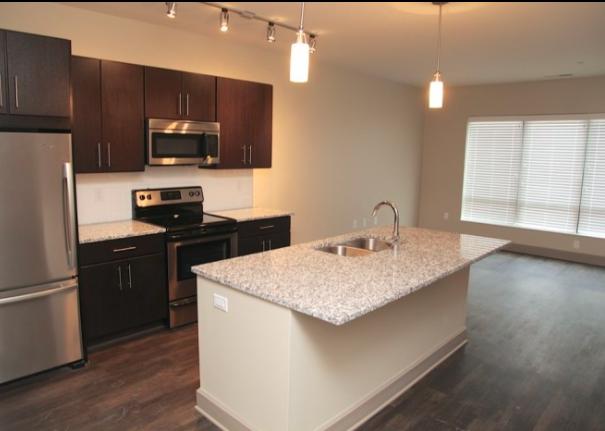
Part of this can be attributed to inadequate finances following the recession; part of it can be attributed it to changing preferences and demographics. Young people are getting married and starting families later in life; so too are they delaying buying their first home. On the other end of the spectrum, there is an increasing rental demand from empty nesters looking for low-mainitence lifestyles. Both cases have resulted in an increased spread of luxury apartment buildings offering things like granite countertops, walk in closets, high ceilings with crown molding, wood floors, and prime locations walking distance to restaurants  bars, shops, and parks. The Short North, Downtown, German Village, Victorian Village, Italian Village, and Brewery District are popular areas. Of course, this all comes at the expense of soaring rental rates. One bedrooms of this sort are rare for less than $1000 and two bedroom units can cost as much as $3000 per month. 


Aston Place is one of many newly constructed apartment complexes in the Short North

As a result, homeowners can find some strong incentives to buy, including historically low interest rates and tax incentives. Not to mention, when you buy a home, you benefit from building equity and property appreciation. You can update or modify your home as you please and don't have to abide by silly rules ("no candles"), and forget paying an extra $30/month for having a pet, and another $80 for parking your car. Use Realtor.com's Rent vs. Buy Calculator to see which option would make more financial sense for you, or contact me to see how I can help. 

Experts expect apartment construction to slow down within the coming year, as the best locations are purchased and developed. 


April 8, 2015

Housing's Supply Problem Exposed

You may already know that the current residential real estate market is suffering from a lack of supply. But just how serious is this issue, and what's causing it?

According to a recent CNBC article, The National Association of Realtors reported that the housing market was still underperforming in February. There are currently just less than 1.9 million homes for sale, which is less than last year and "well below current demand." Whereas the number of listings typically increases by 6 percent from January to February, the number of listings this year increased by less than 2 percent. Even foreclosures are down, reaching their lowest level last month in 8.5 years. Lack of supply results in increased prices: prices have risen 7.5 percent year over year, as the median home sale price as of Feburary was $202,600. Lawrence Yun, Chief Economist for the Realtors, considers these price gains "unhealthy." So, what's behind this persistently low supply?
  • Larger builders are gaining share over smaller builders, who don't have access to credit. Larger builders tend to cater more to higher-end buyers, not first-time homeowners, pricing this key demographic out of the market.
  • Relatedly, many people are choosing to rent instead of buy. For this reason, rental prices have increased sustainability and show no signs of stopping. In turn, renters are struggling to save enough money for a down payment.
  • Buyers are low on cash and are highly concerned with value following the recession. They want to feel as if they are getting a good deal, which is hard to do in light of increasing prices and fewer housing options. 
Peter Boockvar, managing director and Chief Market Analysis of The Lindsey Group, states that household growth and even higher rental rates will cause a nice rebound in the housing market, reaffirming that a slowdown in the pace of home price gains is much needed.

Now is a good time to sell, as sellers can take advantage of the recent price increases caused by the limited supply of listings. Visit my website and contact me to see how I can help. I am a full time Realtor with a lifetime of experience serving sellers (and buyers!) in Ohio.


March 18, 2015

Tax Breaks for Homebuyers

Buying a home this year has many benefits, such as persistently low interest rates. Additionally, Realtor.com recently published an article outlining some of the best tax benefits for new homeowners. To get the best value, consider taking advantage of the following tax breaks:

  • Buy Deductible Points. Deductible points are common tax breaks, and now is the perfect time to buy them. With historically low interest rates under 4 percent, extra points can further reduce the rate you receive. A point costs approximately 1 percent of your loan amount and usually lowers your interest rate by about .25 percent. For example, if you buy two points off a 30-year fixed rate mortgage of $350,000 with an interest rate of 3.8 percent for $7,000, your interest rate would fall to 3.3 percent. Even if points don’t significantly reduce your monthly payments, you can still receive a tax benefit because points are considered a form of interest and are tax-deductible in the same year for most first-home purchases

  • Use Energy Credits. Energy saving systems permit you to write off 30% of the cost as part of the Residential Renewable Energy Tax Credit until the end of 2016. The many eligible items include geothermal heat pumps, solar panels and water heaters, fuel cell property, and wind turbines. There are no maximum credit limits for qualifying items (except for fuel cell property, at $500 per kilowatt). If the amount of your tax credit is greater than your tax liability (that is, if you can deduct more than you owe in taxes in 2015), you can roll the credit over to your 2016 taxes.

  • Stop Renting! Renting is becoming increasingly common among young adults, but it’s not getting any less expensive: the Wall Street Journal reports that rent has increased by 15.2 percent since 2009. While it makes sense to fulfill short-term housing needs, you are not building any equity when you rent and your monthly payments can therefore be seen as sunk costs. Renters do not benefit from tax breaks the way homeowners do. Not sure whether renting or buying is more cost effective? Use Realtor.com's Rent or Buy calculator to find out. Your most trusted resource when searching for a home is an experienced REALTOR who is a good communicator and knows the market well. If you or someone you know is thinking about buying a home in Central Ohio, visit my website and contact me to see how I can help. 


June 18, 2014

Sellers: Turn a "Looker" into a "Buyer"

The best incentive you (as a seller) can offer buyers is a fairly-priced home in great condition. However, there are more creative incentives that may make your listing stick out. Buyers need to be able to picture themselves living in the home you are selling. If you are selling a home or condo on the water, consider including a kayak, jet ski, or fishing equipment in the home's asking price. If your home in on or near a golf course, include a golf cart. These "bonuses" will help stimulate excitement among buyers.

If you are selling a home as a vacation home, consider leaving it furnished or providing a gift card for furniture. A buyer may not have enough furniture to fill a second home. Stocking your home with fresh linens, towels, and kitchenware is also a plus.

If your buyers are concerned about affordability, you can coax them into buying your home in a number of ways. Offer to pay some of their closing costs. If your home requires you to pay HOA fees, offer to pay the first year's worth of HOA fees for your buyer(s). The same goes for homes that are near community country clubs. You can offer to pay initial membership fees, and also monthly fees as you see fit. This will help buyers picture themselves living in your home, because it links them to their new community from the start. You can also offer to pay a year of property taxes and/or mortgage payments. Some sellers allocate money for buyers to use on repairs and rennovation, which helps when buyers are concerned about the condition of the home. 

It comes down to understanding your buyers--what are they looking for most? Some sellers leave behind appliances, televisions, and even cars!  No matter what you end up including in your final offer, be sure to communicate with your real estate agent about prospective buyer feedback, which can help you strategically list and market your home.


Need an agent? Contact me! I work with both buyers and sellers in Central Ohio. Read what my previous clients have to say, here.

April 11, 2014

Tax Advantages of Home Ownership


Owning a home is expensive, but don't forget about the silver lining: tax benefits. Tax advantages accompany home ownership at every stage of the process, according to an article published by Realtor.com. When you first buy your home, in most cases, loan discount points and origination fees are tax deductible to the buyer, regardless of who pays them. Tax benefits accompany the purchase of many different types of homes, including single family homes, condos, apartments, town homes, and even motor homes and houseboats--so long as there are cooking, sleeping and bathroom facilities. 

When financing your home, you can deduct mortgage interest used to acquire or improve your principal residence in the year that it is paid (although the IRS does limit the amount you can deduct if your loan exceeds $1 million). This is especially meaningful during the early years of a home loan, in which interest accounts for a large portion of monthly payments. For people in the 28% federal tax bracket, this can cut borrowing costs by nearly one-third. Furthermore, you can deduct interest on an additional $100,000 of mortgage debt at any time, to be used for any purpose. Mortgage interest on a second home is also fully deductible--just be sure that the IRS cannot declare the home a residential rental property, which is not eligible for the same tax deductions. According at an article published by Bankrate.com, you must vacation at least 14 days at your second property or spend there more than 10 percent of the number of days that you rent it out--whichever is longer--in order to be eligible for mortgage interest tax deductions.

Finally, selling your home also provides significant tax benefits. If you have owned and ouccipied your principal residence for at least two of the past five years, you can earn up to $500,000 for a married couple and $250,000 for a single person on the sale of that house and pay no federal income tax. 

For information about the tax deductions associated with investment property, click below: