Pages

Showing posts with label home ownership. Show all posts

November 8, 2016

Mortgage Minute: Do I Want to Buy a Home?

This is the first of a series of articles from our guest blogger, Cynthia Carr of Stearns Lending.

I am a big believer that people should be informed and educated on mortgage loans. This is the single largest purchase of your life and you only get one chance to do it right the first time. Home ownership is one of life’s major events, and it provides some unique personal and financial rewards. It can provide lasting stability and security and a great place to relax at the end of the day.

Here are a few things to consider if you’re still undecided about taking that leap:
  • Home ownership may offer you important tax benefits.
  • You’ll have the potential to build equity. This is the portion of your home that you’ve paid for, plus any rise in its value.
  • You can decorate and remodel your home to suit your personal tastes.
  • It’s a potential investment, since your home’s value may appreciate over the years.
  • You won’t have to worry about your rent going up when your lease expires, or having to move if your rental property is no longer available or affordable.
Now that we have giving you the reasons why you should consider purchasing your new home, let’s discuss the first steps. It can be overwhelming! What do I do first? Do I get a Realtor? How do I get a Realtor? Can I qualify for a mortgage? If so, what does that mean in terms of purchase price of a property? How much money do I need? If you haven’t considered these questions, you should now. This blog series is going to guide you and prepare you for home ownership and all that comes with that from those questions to the final signature on the loan documents and getting the keys to your new home.

This month we will discuss this very important step: Do I want to purchase a home?

Let’s think about that for just a second. The knee-jerk reaction is “of course I do," but in reality you have no idea how or where to start. The very first thing you should do is to find a mortgage lender. You can ask friends, family, or colleagues for the name of the lender they worked with when they purchased a home. Please know that it is important to feel informed and confident with your lender. Getting more than one option and talking to more than one lender is absolutely the right thing to do. I know, I know, I am a lender and other lenders will not be happy that I tell you to do that. The truth is that when you have your credit pulled for a mortgage within a 14-day period, it is very unlikely that your credit score will be impacted any more than if it were only one lender checking it. Do not have more than three lenders pull it because rates are rates and all lenders are very close in that area and when you have more than three options it becomes less helpful and more confusing.

Avoid online lenders. They are not familiar with all markets and central Ohio has its own quirks when it comes to who pays for what and what credits the buyer receives from the seller. You need to feel confident in your decision. You will feel like you are going to a financial therapist when you start talking to a lender. We ask questions that have always been “taboo” to talk about: How much money you make, the debts on your credit report, and how much money you have in the bank. These are all serious questions and are a requirement for your lender to know. This confidential information is not shared with anyone unless you as the borrower provide us with the permission to do so.

Let’s wrap this month’s discussion up with a final thought. Before you start house hunting, find a lender who cares about you, one you trust, and who has the knowledge to help you with purchasing the place you call home.

Cynthia is the Branch Manager at the Stearns Lending, 1900 Polaris Parkway in Columbus and can be reached at CCarr@Stearns.com.

February 4, 2015

What Millennials Want / The Millennial Mindset

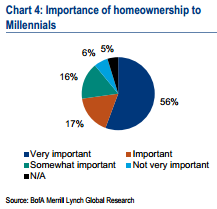
As the housing market prepares to accommodate the next wave of homebuyers, real estate agents should be attuned to the Millennial mindset. Bank of America Merrill Lynch conducted a survey of 1000 adults aged 20-34 across various U.S. cities to determine what Millennials (those born after 1980 through the mid/late 1990s) want.

  • Home ownership is highly valued. 73% of survey respondents report that owning a home is either very important (56%) or important (17%) to them, signifying that Millennials possess a strong desire to own their own home, even if they do not own one yet.

  • When purchasing a home, Millennials most value 1) price, 2) commute time to work, and 3) home size. The importance placed on other factors vary across demographics. For example, married Millennials value school district over restaurants and entertainment whereas the opposite is true for single Millennials. 


  • Millennials prefer the suburbs over the city. 48% of respondents report that they currently live in a suburb and want to live there in the future or live in a city and want to move to a suburb in the future. Contrarily, only 31% of respondents said that they currently live in a city and wish to live in a city in the future or currently live in a suburb but want to move to city. 

  • Millennials are minimally concerned about flexibility. While some may argue that a strong rental market means that people highly value the flexibility to move among cities, the majority (69%)  of survey respondents claimed that it was either not very important or only somewhat important to them. This flexibility is more important to single Millennials than married ones, with 35% and 25% citing flexibility as important or very important, respectively.


October 16, 2014

Millennials Put Hold on American Dream

Millennials-those born after 1980 through the mid/late 1990s-are not buying homes at the rate previous generations have. To determine why, Bank of America Merrill Lynch conducted a survey of 1000 adults ages 20-34 across various U.S. cities. This is what the company found:

Millennials want to own their own home, but lack the financial resources to do so. 73% of survey respondents report that owning a home is either very important (56%) or important (17%) to them, indicating that Millennials maintain the strong desire to own their own homes consistent with the classic perception of the American Dream. However, Millennials have been negatively affected by cyclical economic factors including high unemployment, lack of wage growth, and lack of credit. 

The study suggests that Millennials may have a distorted image of interest rates as a result of growing up during a time when interest rates were artificially low, hovering around 3-5%. Looking back in time presents a different picture: since 1971, the median 30-year fixed mortgage rate has been 7.98%. Employment for those ages 25-34 is 75.6%, which is more than the low of 73.4 but still behind the pre-recession level of 83%.  Wage growth has been slow, with the real median income for those under 35 falling 16% from $42,000 in 2007 to $35,000 in 2013. Tight credit remains another issue. The average qualifying FICO score as of July 2014 (690 and 760 for an FHA mortgage and conventional mortgage, respectively), is nearly 13 points greater than the average score back to 2000. 


Student loan debt is also hindering first-time homebuyers. One quarter of survey respondents cite that student debt has prohibited them from purchasing a home to date. The median education debt for those under 35 was $17,200 in 2013. It is not a surprise, then, that the survey revealed that Millennials who have student loans are 55% more likely to currently rent than own a home.

Nineteen percent of Millennials are living with their parents. This consists of 31% for those ages 20-24, 16% ages 25-29, and 10% ages 30-34. Many Millennials are living in an apartment (38%) while others have their own home (31%). Not surprising, higher income earners are much more likely to be living in their own home. 12% of respondents making less than $25,000 own their own home, while 60% of those making $75,000-$100,000 own their own home. 


Millennials are delaying household formation, including getting married and having children. Annual household formations of married couples lave dropped 61% for those under 25, 41% for those 25-29, and 18% for those 30-34 since 1982. Mellennials are having fewer kids, and they are having them later in life. Birthrates for women ages 20-29 are decreasing while birthrates for women ages 30-39 are increasing.

As the economy continues to recover and Millennials increase their earnings, they are expected to enter the housing market in greater numbers. Half of those surveyed plan to buy a home within the next five years. The American Dream is not lost: it is merely on hold. 


July 14, 2014

Post-Grad Housing Market Expected to Improve

90% of Americans 35 and younger prefer to own a home over renting one, according to a recent Fannie Mae survey. However, only 36% do own a home, down from the 2005 peak (43%) and the lowest percentage yet since home ownership by age was first recorded in 1982. Many factors come into play when examining barriers to home ownership, including the following:
  • Student debt. It's no secret that the cost of higher education is rising. Moreover, more students are pursuing advance degrades (such as a masters degree or MBA), luring students even further into debt.
  • Stagnant wage growth. Recently, wage growth has been offset by higher prices, hindering prosepctive homeowners. 
  • Tight lending standards/inadequate credit. Not having enough credit makes it difficult for prospective homeowners to qualify for loans. Tight lending standards make it even more difficult, as lenders are more selective when approving people for home loans. Unfortunately, it takes time to build a good credit score. 
  • Competition. Ironically, many of America's "youngest" cities are also the most expensive--New York City, Chicago, Las Angeles, and San Francisco among others. Competition in these cities drives up housing prices, pricing young residents out of the market. Furthermore, people in their 20s and early 30s cannot compete with the all-cash offers that are more common in competitive markets. 
  • Low inventory. Low inventory has characterized the housing market for over a year now, meaning the market typically favors sellers over buyers. When in-damand houses enter the market, they tend not to stay there long; some sell within the week. This discourages first-time homebuyers, who want more time before committing to any given house. 
  • Inability to generate a down payment. Many of the above points (including stagnant wage growth and student debt) result in the inability to generate a down payment. People in their 20s and 30s have yet to reach their prime earning years, and have also had less time to build up their savings. 
Fortunately, things are looking up for young homeowners. Mortgage lending is loosening up, as lenders approve people with lower credit scores and smaller down payments. As the job market continues to recover from the 2007-2008 crisis, incomes are expected to rise. However, this will likely not result in a housing "boom." Currently, many recent graduates are living with a parent (11 million in 2012, according to Pew Research Center). Instead, college graduates will slowly and steadily trickle out of their parents' homes and into the adult world.


April 11, 2014

Tax Advantages of Home Ownership


Owning a home is expensive, but don't forget about the silver lining: tax benefits. Tax advantages accompany home ownership at every stage of the process, according to an article published by Realtor.com. When you first buy your home, in most cases, loan discount points and origination fees are tax deductible to the buyer, regardless of who pays them. Tax benefits accompany the purchase of many different types of homes, including single family homes, condos, apartments, town homes, and even motor homes and houseboats--so long as there are cooking, sleeping and bathroom facilities. 

When financing your home, you can deduct mortgage interest used to acquire or improve your principal residence in the year that it is paid (although the IRS does limit the amount you can deduct if your loan exceeds $1 million). This is especially meaningful during the early years of a home loan, in which interest accounts for a large portion of monthly payments. For people in the 28% federal tax bracket, this can cut borrowing costs by nearly one-third. Furthermore, you can deduct interest on an additional $100,000 of mortgage debt at any time, to be used for any purpose. Mortgage interest on a second home is also fully deductible--just be sure that the IRS cannot declare the home a residential rental property, which is not eligible for the same tax deductions. According at an article published by Bankrate.com, you must vacation at least 14 days at your second property or spend there more than 10 percent of the number of days that you rent it out--whichever is longer--in order to be eligible for mortgage interest tax deductions.

Finally, selling your home also provides significant tax benefits. If you have owned and ouccipied your principal residence for at least two of the past five years, you can earn up to $500,000 for a married couple and $250,000 for a single person on the sale of that house and pay no federal income tax. 

For information about the tax deductions associated with investment property, click below:


February 3, 2014

Frist-Time Homebuyers: Are you Ready?

Choosing to purchase your first home is a big decision, and it should be well-infomed. Before you decide to commit, ask yourself the following questions, as posed by an article in The Columbus Dispatch:

1) Are you aware of home ownership expenses? Qualifying for a mortgage and having enough money for a downpayment are huge considerations--but they aren't the only ones. Homeowners also pay property taxes, mortgage insurance, utilities costs, and routine maintenance expenses. And what if you have to buy a new roof or A.C. unit? Certified financial planner Paul Dolce urges buyers to wait until they can put 20% down on a home to avoid mortgage insurance and to "establish a a pattern of financial discipline."

2) Are you willing to sacrifice your weekends? Maintaining a home requires several factors--such as lawn care, garden care, DIY projects such as painting, and home repair. On average, adults spend 3-4.3 hours on lawn/garden work each week, according to a 2009 Bureau of Labor Statistics survey. In other words, owning a home does not only require money--it also requires time.

3) Are you sure you'll want to live in this house for at least five years? You build equity while you live in your home. Thus, the longer you live there, the more financially practical it becomes to buy the home rather than rent it. Roughly, if you plan to live in your home for less than five years, home expenses and buying/selling costs may put you at a  loss. It would be more economical for you to rent.

4) Are you confident your relationships will remain the same? Is there a possibility of divorce in your future? What about marriage? Children? If these scenarios are a part if your relatively near future, you may want to delay buying a home. What home and neighborhood is right for a single person may not be so great for a family with two kids. Often, married couples like to buy homes together, so if you're in a serious long-term relationship, it may be smart to wait a bit longer before you take the plunge into homeownership.

5) What is your backup plan? If something happens to your job, or if you need to finance a new hot water heater or car, it's good to have at least six months of housing expenses saved up. This will act as a cushion and ensure that unforeseen expenses won't threaten your new home and lifestyle.

6) Have you researched the neighborhood? Neighborhoods come with different lifestyles. Is the neighborhood you're considering consistent with your way of life? For example, if you're a family with small children, you'll want to ensure that the neighborhood is family friendly. If you live near many retirees or empty nesters, they may be less forgiving when your kids run through their yards. If you like to entertain, you'll want to know that you can play louder music without bothering other people. Ideally, your neighbors will join in, and the area you live in will have lots of kids who can befriend your own.

If you feel confident with way you answered these questions, then congratulations! You're most likely ready to buy your first home. I specialize in first-time home buyers. Please contact me to discuss your home-buying wants and needs, and to see what I can do for you.


January 30, 2014

Co-Signing a Mortgage? Beware


Jim Weiker, writer for The Columbus Dispatch, warns against the danger of co-signing a mortgage. The co-signer assumes all the risks of the loan but receives none of the benefits. The lender is just as responsible, and this can amount to taking on a second mortgage. A co-signer is responsible for making a payment if the other person defaults. Ask yourself if you can afford that—as many as 3/5 co-signers end up paying the loan as reported by the Federal Trade Commission.

Even worse, some theorize that co-signers are pursued when lenders face delinquent funds. A lender could sue you, especially if you have better credit than the other signee. Thus, it could limit the co-signer’s ability to borrow money him/herself.

Finally, co-signing for a friend or family member could put a strain on your relationship. Would you judge they way someone spent that money that you co-signed for? If you want to financially help someone you care about, consider giving money towards the down payment (up to $13,000/year without paying a gift tax, or $26,000 filing jointly).

So before you co-sign a mortgage, think twice before you agree. Read the full article here.


September 6, 2013

What is Title Insurance?


Title insurance (a one-time fee that insures the policyholder forever) is a contact that protects your ownership of real estate by making good losses from defects in title as a result of liens and encumbrances. Whereas most forms of insurance (i.e. car insurance) cover people for future events, title insurance protects you from past events.  Multiple people can have different types of claims on a piece of property, such as mortgages and leasehold rights (ex: liens due to unpaid taxes). Those who have claims on the property own a portion of that property; however, the property can be sold without their consultation. Because the lien stays with the property until it is released or satisfied, the new owner may have no knowledge about the claims on the property he/she is purchasing. Title insurance aims to ensure you have a clear title and full rights of ownership. Still, some claims, such as easements, will continue to remain with the land.

Title insurance companies check pubic records for anything that may affect your ownership. They may uncover judgments against previous owners and unpaid taxes and mortgages. The company reports these defects so they can be corrected. Because the title company insures your property, it’s in the company’s best interest to clear all possible liens or encumbrances to the property before closing.

In addition to clearing risks prior to closing, title insurance companies seek to resolve “hidden risks”—claims which may arise after you have purchased your home, for example a forged will or deed. To protect you against these damages, title insurance 1) defends your title, in court if necessary, at no personal cost, and 2) bears the cost of settling the claim if it proves valid, thus perfecting your title.

Finally, title insurance helps you to sell your home. The seller must present evidence that he/she holds valid title to the property, which can be satisfied by providing a title insurance policy covering the interests of the seller. 

Click on the video below for a brief, visual explanation of title insurance.